
Quick Answer: Hair botox is a deep conditioning treatment that floods damaged strands with hydrolyzed keratin, amino acids, and collagen to reduce frizz and restore shine. It contains no actual botulinum toxins. Results usually last two to four months, and the treatment works colored, chemically treated, or naturally coarse hair alike.
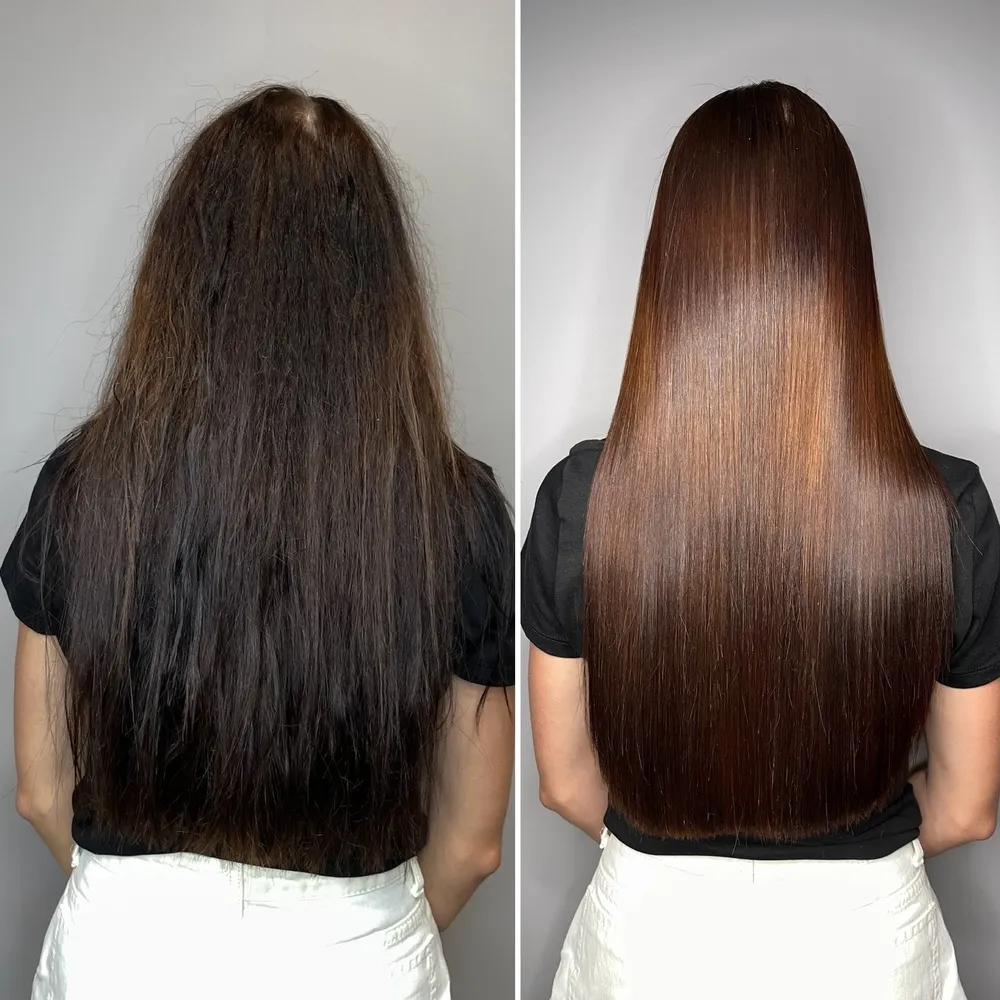
Frizzy, over-processed hair loses its outer protein layer over time. Bleach, heat styling, hard water, all of it strips the cuticle until strands feel like straw and reflect almost no light. That’s the gap hair botox is built to close, and it does it without the harsh chemicals found in older straightening formulas.
This piece breaks down what the treatment contains, how hair botox compares to a keratin smoothing service, what a session looks like from start to finish, and how long you can expect the results to hold up in real San Francisco weather (fog included).
What Hair Botox Actually Is (And Why the Name Is Misleading)
Hair botox is a topical deep conditioning treatment, not an injectable. The name is stuck because the effect mimics what cosmetic botox does for skin: it fills gaps, smooths the surface, and makes everything look plumper and younger. On hair, that translates to filling in micro-damage along the cuticle rather than relaxing a muscle.
Most formulas are built around hydrolyzed keratin, collagen, vitamin B5, and amino acids like arginine or cysteine. These are the same proteins your hair is naturally made of. When hair is damaged, whether from color processing, thermal reconditioning, or just years of blow drying, the cuticle develops tiny holes and lifted edges. The treatment job is to physically fill those gaps.
The Core Ingredients That Do the Work
Hydrolyzed keratin is the workhorse. Its keratin protein has broken down into smaller molecules so it can penetrate the hair shaft instead of sitting on top of it. Collagen adds elasticity, which matters if your hair snaps easily. B5, also called panthenol, pulls in moisture and helps the strand hold onto it.
What Hair Botox Is Not
It’s not a straightener in the sense of chemical-relaxer. It won’t permanently alter your curl pattern the way thermal reconditioning does. And unlike some Brazilian Blowout formulas from a decade ago, reputable modern hair botox treatments are formaldehyde-free, which matters both for your lungs during application and for long-term hair health.
How Hair Botox Compares to Keratin Treatments and Brazilian Blowouts
Here’s the thing most people miss: these three services get lumped together constantly, and the confusion costs clients’ money when they book the wrong one.
Keratin treatments (sometimes called Brazilian keratin) generally use heat to bond a formaldehyde-releasing chemical into the hair for a semi-permanent smoothing effect that can last three to five months. Brazilian Blowout is a specific branded version of that category, and the formaldehyde-free versions available today rely on similar bonding chemistry with cleaner ingredients.
Hair botox sits one step lighter. It’s a conditioning treatment first, a mild smoother second. If your goal is bone-straight hair with zero frizz for months, a keratin service or thermal reconditioning will get you closer. If your hair just needs repair, shine, and manageable frizz reduction without changing its natural texture much, hair botox is the better fit.
Hair Botox vs Brazilian Blowout, Side by Side
Brazilian Blowout typically involves a heat-activated bonding step and lasts longer, often three to four months of noticeably smoother texture. Hair botox skips the intense heat-sealing phase in most protocols and focuses on protein infusion, so the frizz reduction is real, but the texture change is gentler.
Who Should Pick Which Treatment
Fine, color-treated hair that breaks easily usually does better with hair botox because it repairs without adding more chemical processing on top of already-stressed strands. Thick, very curly, or coarse hair that needs serious frizz control often benefits more from a full keratin or thermal reconditioning service.
What Actually Happens During a Hair Botox Session
A typical appointment runs 60 to 90 minutes depending on hair length and density. Short appointment. Long-lasting effect. That trade-off is part of the appeal.
The stylist starts with a clarifying shampoo to strip buildup, oils, and product residue so the treatment can penetrate the shaft instead of sitting on top of old silicone. Then the botox formula gets applied section by section, usually left to sit for 20 to 40 minutes so the proteins can absorb. After that, most protocols involve a partial rinse followed by blow drying and a light flat iron pass to help seal the cuticle.
I’ve seen clients underestimate the clarifying step and regret it. Skip a proper cleanse beforehand, and the treatment just sits on top of product buildup instead of getting into the strand where it actually matters.
How Long Does Hair Botox Last, and What Affects It
Two to four months is the honest range, and hair porosity is the biggest variable. Highly porous hair, the kind that soaks water fast in the shower, tends to absorb more of the treatment initially but also loses it faster. Low porosity hair holds results longer but can be trickier to treat evenly in the first place.
Washing frequently matters, too. Sulfate shampoos strip the protein layer faster than a sulfate-free formula. Salt water and chlorine speed up the fade, which is worth knowing if your summer includes Ocean Beach or a lot of pool time.
Aftercare That Actually Extends Results
Sulfate-free shampoo, a weekly protein-light conditioning mask, and spacing out heat styling all extend the window. Skip these and you might see fade closer to the six-week mark instead of three months.
Why San Francisco Fog and Salt Air Make Frizz Control Harder
Living near the coast changes math on frizz. The fog that rolls over Ocean Beach and the Richmond District carries fine moisture that hair fibers absorb almost instantly, and porous or damaged hair grabs that moisture fastest, which is exactly what triggers frizz and flyaways.
Salt air works differently but lands on the same result. It draws moisture out of the hair shaft between exposures, leaving strands drier and rougher on the surface even as humidity swings the other way. Bay Area clients dealing with both fog and salt spray in the same week often notice their blowout doesn’t hold the way it might in a drier inland city, and that’s not a styling failure. It’s chemistry.
A properly sealed cuticle resists both problems better. That’s part of why hair botox tends to perform well specifically in coastal climates: the protein fill smooths the cuticle layer, so it lies flatter, which limits how much ambient moisture the strand can absorb in the first place.
Adjusting Your Routine for Coastal Humidity
Stylists in fog-heavy neighborhoods often recommend a slightly stronger anti-humidity finishing product post-treatment and spacing washes a day or two further apart than clients in drier climates would need. Small adjustments. Noticeably better hold.
How Much Does a Hair Botox Treatment Typically Cost
Pricing varies by hair length, density, and the salon product line, but most clients should expect a range roughly between 150 and 400 dollars for a full treatment at a professional salon. Short, fine hair sits at the lower end. Long, thick, or heavily processed hair that needs more product, and longer processing time pushes toward the top of that range.
That’s a real investment, so it’s worth comparing against the alternative. A keratin smoothing service often costs more and requires a longer appointment, while at-home protein masks cost far less but can’t replicate the penetration a professional formula achieves under controlled processing conditions. Mid-range options. Real results. That’s usually the pitch, and for damaged or color-treated hair, it tends to hold up.
Common Myths About Hair Botox, Cleared Up
Myth one: it contains actual Botox. It doesn’t. Zero botulinum toxin, ever, in any legitimate formula on the market.
Myth two: it’s the same as a keratin treatment. Not quite as covered above. Chemistry and the intensity differ even though both fall under the broader “smoothing treatment” umbrella.
Myth three: results are permanent. They’re not, and any salon claiming permanent results from a hair botox service specifically is overselling it. Two to four months is the realistic window, sometimes longer with excellent aftercare, sometimes shorter with frequent swimming or harsh shampoo use.
Myth four: it works the same on every hair type. It doesn’t. Fine European hair, coarse Afro-textured hair, and chemically relaxed hair all respond differently to protein infusion, and a stylist who assesses porosity before applying the formula will get dramatically better results than one working off a one-size-fits-all protocol.
Is Hair Botox Safe for Colored or Chemically Treated Hair
Yes, and this is actually where it shines. Because the treatment adds protein rather than stripping or altering structure with harsh chemicals, it’s frequently recommended after color services to reverse some of the protein loss that bleach and lightener cause. Stylists in the Bay Area routinely pair a root touch-up with a hair botox follow-up specifically for this reason.
That said, timing matters. Getting color and hair botox on the exact same day can sometimes affect how evenly pigment develops, so most experienced stylists space the two services by at least a few days when possible.
What to Expect in the First Week After Treatment
The first 48 to 72 hours matter more than clients usually expect. Most stylists ask you to avoid washing, tying your hair up, or using clips during this window because the protein bond is still set. Sleep on a silk or satin pillowcase if you have one. Cotton pulls the cuticle and can undo some of the smoothing before it’s fully locked in.
After the initial window, switch to a sulfate-free shampoo and a lightweight conditioner. Heavy oils and silicones aren’t off-limits but layering them on too heavy in week one can coat the strand before it’s finished absorbing what it needs. Give it a few washes, then build your normal routine back in.
Conclusion
Hair botox isn’t a gimmick with a confusing name attached for marketing. It’s a legitimate repair treatment built around proteins your hair already recognizes, and for damaged, dull, or color-treated hair it can be the difference between straw texture and something you actually want to touch. If your hair needs frizz control without a full chemical straightening commitment, this is worth asking your stylist about at your next appointment.
Frequently Asked Questions
What is the hair botox exactly?
It’s a deep conditioning treatment made from hydrolyzed keratin, collagen, and amino acids that fill damaged areas of the hair cuticle to reduce frizz and add shine. It contains no botulinum toxins despite the name.
How does hair botox work on the hair shaft?
The protein molecules are small enough to penetrate the cuticle layer, filling gaps left by heat damage, color processing, or environmental stress, which smooths the surface and improves light reflection.
What’s the difference between hair botox and keratin treatment?
Keratin treatments and Brazilian Blowout formulas use heat-activated bonding chemistry for a stronger, longer-lasting smoothing effect. Hair botox is gentler, focused more on repair and shine than dramatic texture change.
Is hair botox right for fine or thin hair?
Generally, yes. Because it repairs rather than adds heavy chemical processing, it tends to suit fine or color-damaged hair better than more intense straightening services.
How often should I get a hair botox treatment?
Most clients return every two to four months, depending on hair porosity, wash frequency, and how much heat styling they do between visits.
Can I get a hair botox and color on the same day?
It’s usually better to space them a few days apart so color develops evenly and the protein treatment isn’t disrupted by the chemical processing.